
We know what gets in the way of development.So we built an approach that does something about it.
Explore our approach ↓We've all seen it. People attend training, learn something useful, promise themselves they'll do things differently.
And then, somehow, not much changes.
But what if we stopped treating development as an event and started thinking about everything that needs to happen to make it work?
The appetite to learn. The awareness of what needs improving. The experience itself. The people who support it. And what happens afterwards.
That's what shapes the way we work at CultureHub.
Not more learning for the sake of it. Development designed to change behaviours and improve performance.
Before we do anything, we get curious.
Because sometimes the training isn't the answer.
You might come to us asking for a sales programme, a leadership workshop or help building resilience.
Great. Let's explore that.
But first, we want to understand what you're trying to achieve.
What's happening in your business? What's not happening that should be? What have you already tried? And what's getting in the way?
We'll talk to your leaders. Your people. The people experiencing the challenges every day.
And we'll sometimes ask questions you weren't expecting.
For example, if your people are overwhelmed and struggling to cope, perhaps another resilience workshop isn't the first thing they need.
Perhaps they need fewer reasons to keep bouncing back in the first place.
We won't always agree with the original brief.
But we will always be interested in helping you achieve the right outcome.
Five things we do deliberately differently.
We know the familiar reasons development doesn't always stick.
So rather than hope those challenges won't show up, we build our approach around tackling them.
We give people a reason to want to learn.
Because being booked onto development and wanting to be there are two very different things.
We don't assume people will arrive enthusiastic, curious and ready to learn.
We help them understand why the experience matters to them.
What could they become better at? Which challenges could become easier? What opportunities might open up? How could their working life improve?
We involve people early, build anticipation and help them recognise the personal value of developing.
Because the most important person in any development programme is the one who needs to want to learn.
We help people see what they can't always see themselves.
Most of us like to believe we're pretty good at what we do.
And we probably are. At lots of things.
But recognising where we could be better takes self-awareness, curiosity and occasionally a little vulnerability.
That's why we don't rely on assumptions about what people need.
We use feedback, behavioural assessments and realistic AI conversations to help make strengths and development gaps visible.
Not to catch people out.
To help them discover opportunities they might never have recognised themselves.
And when people can see the opportunity, they're far more likely to want to do something about it.
We involve the people who can make change stick.
Your managers.
Because someone can leave a workshop with all the enthusiasm in the world, but if their leader doesn't understand what they're trying to develop, that enthusiasm can disappear remarkably quickly.
So we bring managers into the journey.
Before development, we help them understand what their people are working towards.
During it, we equip them to recognise, encourage and coach the behaviours being developed.
Afterwards, we help them support the application of learning in everyday work.
How we do that depends on the engagement. It might involve shared sessions, separate manager development, coaching or practical support.
But we don't treat managers as an optional extra.
They're an essential part of helping new behaviours become lasting habits.
We get people doing, not just listening.
We're big believers in do and review, not chalk and talk.
We keep the theory useful and the application plentiful.
People experience something, explore what happened, discover what they could do differently and have another go.
They challenge each other. Share experiences. Learn from their mistakes. Laugh a little. Sometimes quite a lot.
And our facilitators adapt to the people in front of them.
Different experience levels. Different personalities. Different behavioural preferences.
After all, there's not much point teaching people about adapting to others if we can't demonstrate it ourselves.
We want people leaving confident because they've already started doing what they've been learning.
We make their real world part of the development.
Your people don't work in a textbook.
So why should their development happen in one?
Bring a live sales opportunity. Bring your diary. Bring that conversation you've been putting off.
We'll use the situations, customers, challenges and decisions that actually matter to your people.
Sometimes that means adapting an existing tool or model. Sometimes it means creating something entirely around your business.
The important thing is that people can see how to use what they've learnt.
Not someday. Not in theory.
In the job they're going back to.
And when the development finishes?
That's when we find out whether it's working.
We don't believe a brilliant session and a brilliant outcome are automatically the same thing.
So we create opportunities for participants to reflect on what they've learnt, put it into practice and share their progress with their leaders.
We encourage them to capture their successes along the way.
And we come back to three questions that matter rather more than whether everyone enjoyed the biscuits.
Learn
What did you learn?
Apply
How did you apply it?
Impact
What impact did it have?
We listen to what participants tell us, involve managers in reviewing progress and look at relevant business measures wherever possible.
Sometimes the change is immediately visible. Sometimes it takes longer. Sometimes we discover something that needs a different approach.
That's useful too.
Because knowing what worked, what didn't and what needs attention next is how development keeps getting better.
There's a method behind all this curiosity.
Discover. Diagnose. Design. Develop. Delta.
Five stages that keep our work connected to what you're trying to achieve.
Discover
what's really happening in your business and why it matters.
Diagnose
where capability is today and what needs to improve.
Design
experiences around the right behaviours, people and outcomes.
Develop
through practical, engaging, real-world application.
Delta
brings us back to the change: what's improved, what people are applying and what it means for performance.
It's a consistent approach, but never a rigid formula.
Because your business, your people and your challenges aren't identical to anyone else's.
And your development shouldn't be either.
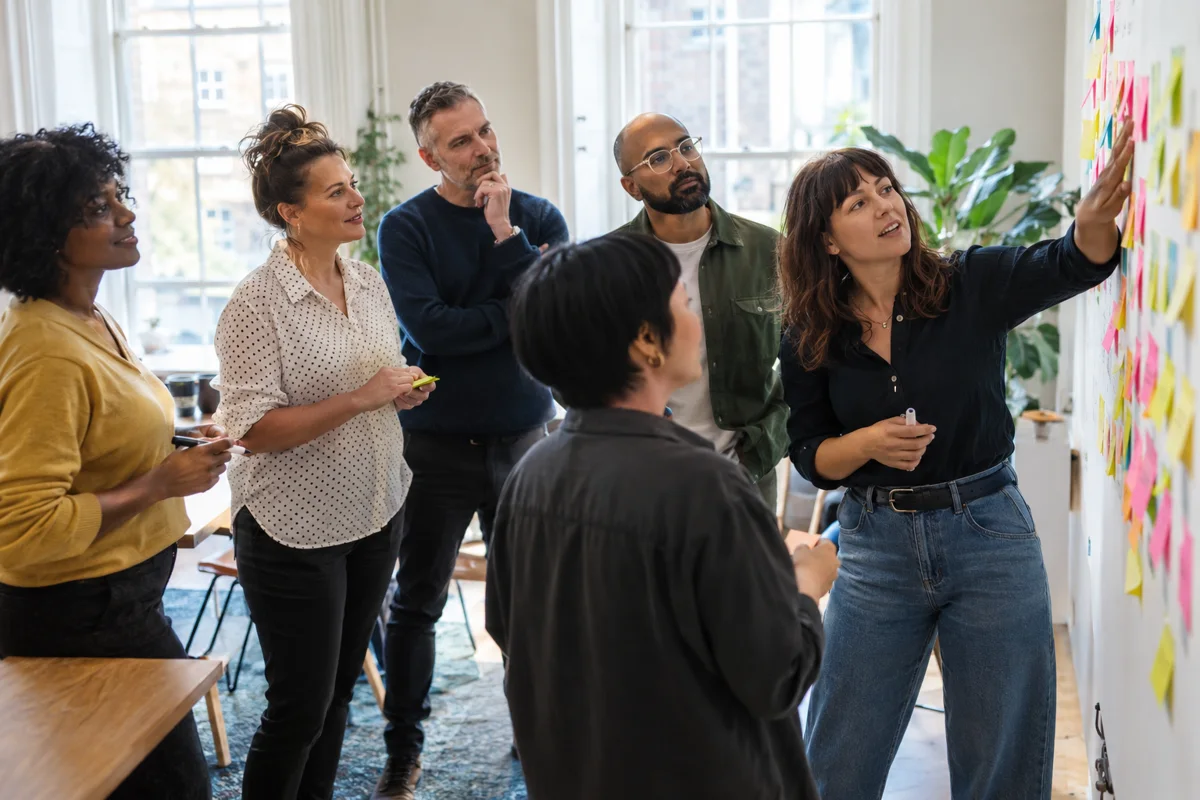
Serious about results. Not ourselves.
We love what we do.
We love seeing people discover they're capable of more than they thought. Watching colleagues connect. Hearing about a conversation that finally went well or an opportunity that turned into a win.
Our facilitators bring experience from actually leading teams, selling, navigating change and handling the challenges they're helping others with.
But we're not there to perform at people.
We're there to help them develop.
And whether we're working with one person, one team or hundreds of people across an organisation, that principle doesn't change.
We want people to feel good about the development. But we'd much rather they feel proud of what they achieve because of it.
Tell us what you'd love to see change.
Better conversations. Stronger leadership. More commercially minded salespeople. Teams working brilliantly together.
Whatever you're trying to achieve, we'd love to understand what's happening today and what better could look like.
We'll bring the curiosity.
You bring the ambition.
Let's have a conversation →